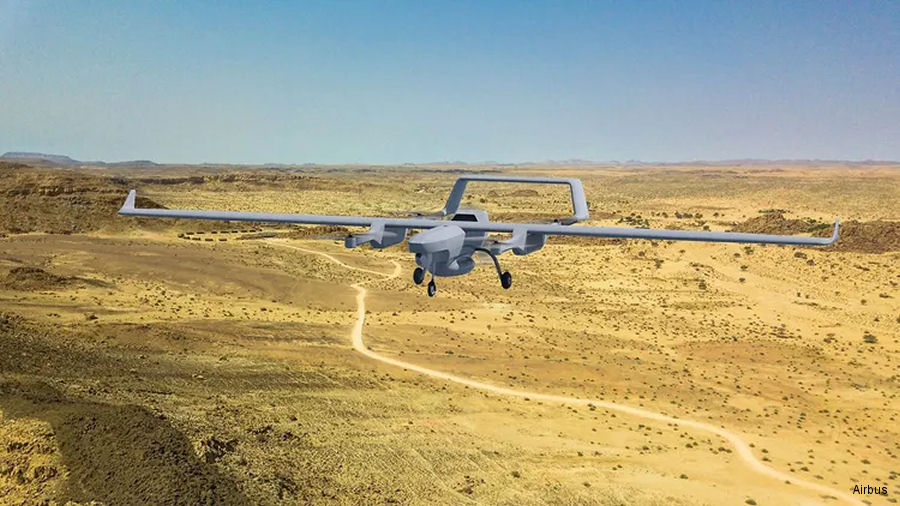
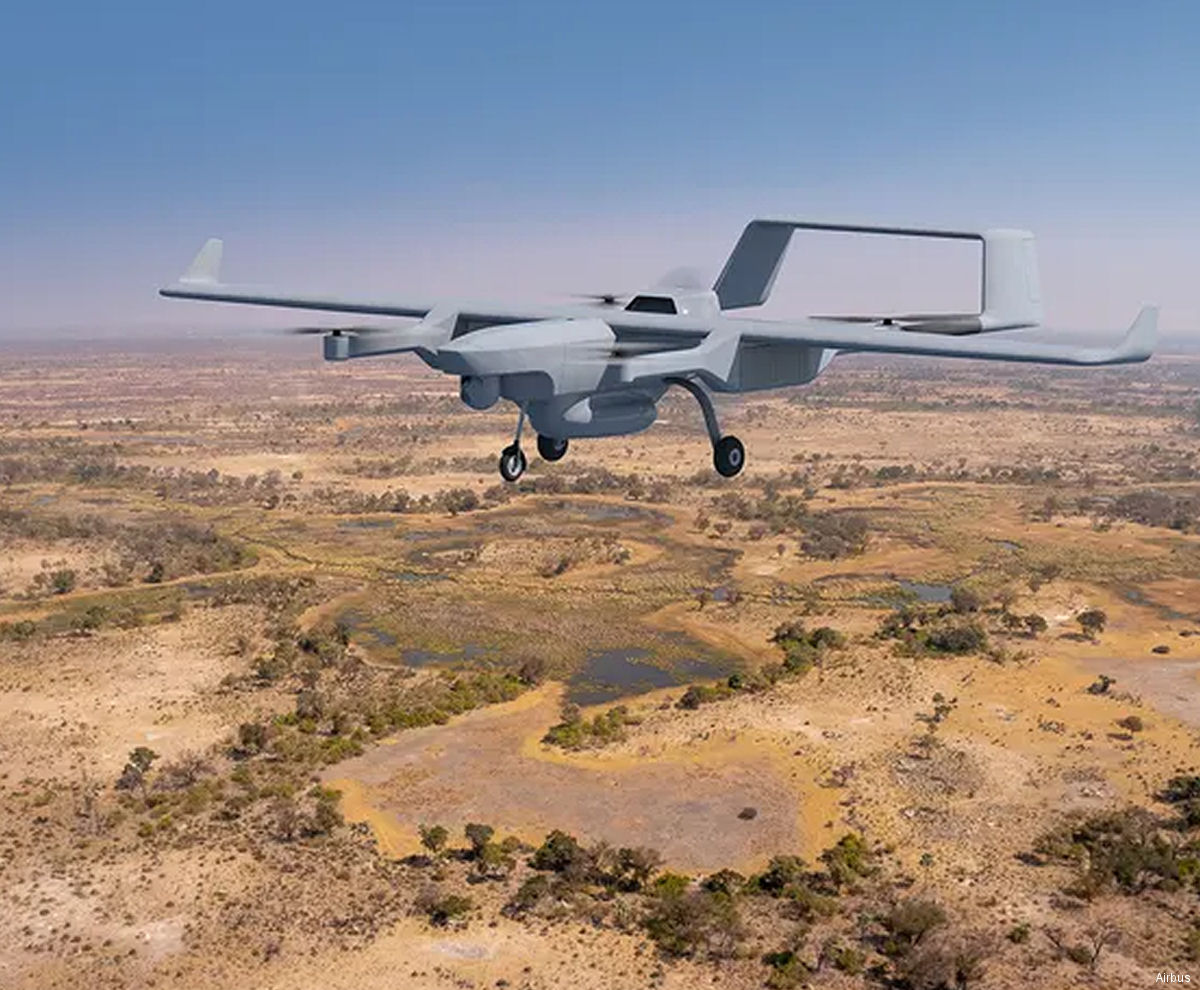
The Airbus Capa-X is a modular tactical uncrewed aerial system (UAS) developed by
Survey Copter, a subsidiary of Airbus Helicopters. The system was publicly presented at the SOFINS 2023 exhibition in France and was designed as a configurable drone platform for military, parapublic, and civil operators. Unlike many fixed-configuration unmanned aircraft, the Capa-X incorporates a modular architecture that allows the airframe to be adapted for different mission profiles, including intelligence, surveillance and reconnaissance (ISR), cargo transport, and electronic warfare. This adaptability is enabled through interchangeable components, including two wing configurations—a long-span wing optimized for endurance and a shorter wing intended for higher speed and maneuverability—as well as a payload compartment capable of carrying equipment weighing up to
20 kg (44 lb).
The system has a maximum takeoff weight (MTOW) of approximately
120 kg (265 lb) and can achieve an endurance of up to
10 hours, depending on configuration. The development of the Capa-X focuses on operational flexibility and airworthiness across a range of environments, including areas where satellite navigation signals may be degraded or unavailable. The aircraft incorporates a hybrid propulsion concept that supports
both conventional takeoff and landing (CTOL) from a runway and vertical takeoff and landing (VTOL) using a twin-boom empennage fitted with four electric lift rotors. In March 2026, the
European Defence Agency (EDA) selected Airbus to lead the Multi-Mission Uncrewed Aircraft System (
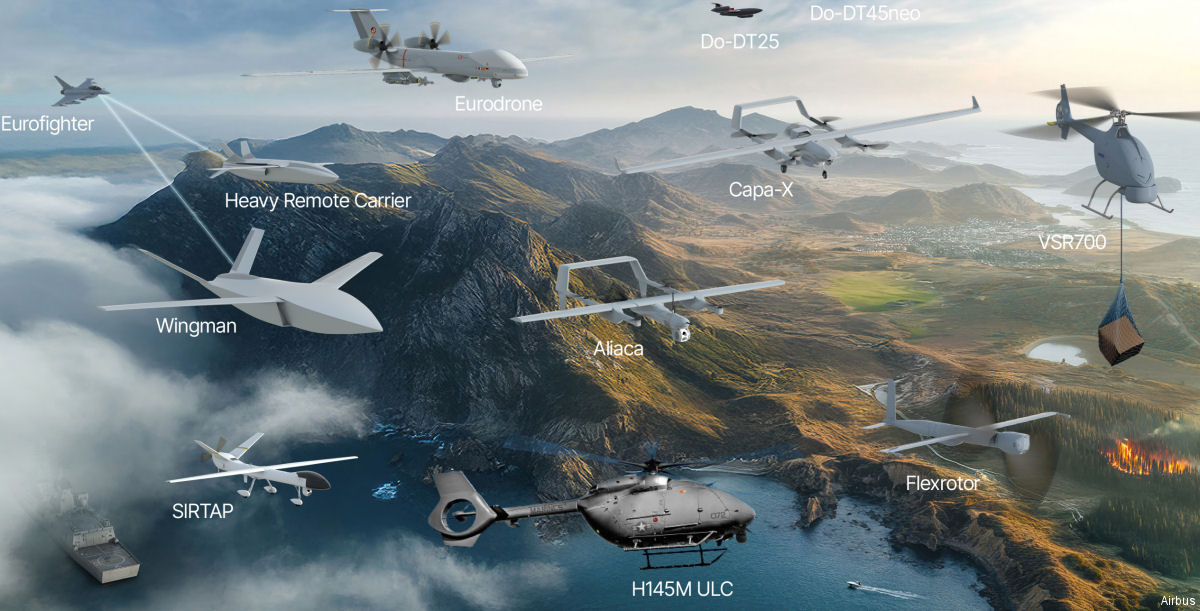
M2UAS) research project, which uses the Capa-X as a platform for testing technologies such as automated in-flight refueling and the deployment of advanced aerial effects. The system reportedly has a communications data-link range of approximately 100 km (62 mi) and is positioned within the medium tactical segment of Airbus’s unmanned aircraft portfolio, between lighter systems such as the Aliaca and larger platforms including the
VSR700.