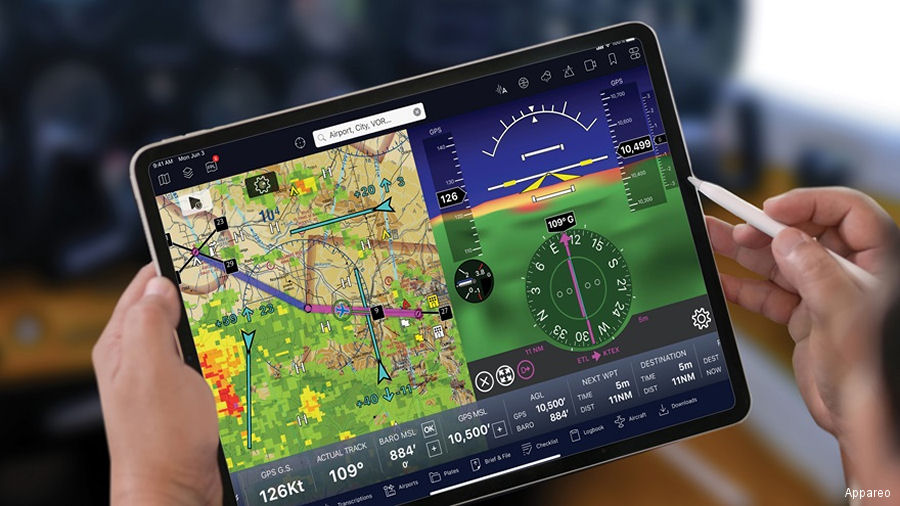
Today, iOS applications are reshaping how helicopter flight planning is done. An iPad or iPhone can now replace an entire flight bag. Routes, fuel calculations, weather updates, and airspace data are available in seconds. According to industry surveys, more than 80 percent of professional helicopter pilots in North America and Europe use a tablet-based solution as their primary planning tool. This shift is not about convenience alone. It is about safety, speed, and better decision-making.
What flight planning means for helicopters
Helicopter flight planning blends route design, weather assessment, performance calculations, fuel planning, and risk management. It’s not just plotting a line on a map. Rotorcraft fly slower and lower than airplanes, and that affects wind, altitude and obstacle clearance choices. Helicopter pilots need point-to-point routing, clear emergency landing options, and precise power-available estimates. Many modern iOS apps are built to help with exactly those needs.
However, it's important to consider that the digital environment is fraught with cyberthreats and restrictions. VPN apps can solve both of these problems. This iOS privacy tool helps securely transmit data on any network thanks to encryption and security measures on VPN servers. At the same time, an iOS VPN allows for more flexibility in your digital location, unblocking websites with certain restrictions.
Why iOS applications matter
iOS applications offer fast access to layers of data: live weather, NOTAMs, charts, and digital logs. They sync with cloud services and share briefings. They reduce paper weight in the cockpit. They also let a pilot re-run performance numbers quickly when conditions change. When used well, iOS apps improve situational awareness and efficiency. They are not a substitute for training or judgment.
Common features to look for
Good apps include: sectional and VFR/IFR charts, route planning and fuel/power calculators, helicopter-specific performance modules, wind-and-weight calculators, integrated weather overlays (METAR, TAF, radar), NOTAM integration, airport/facility details, and checklist management. Offline maps are essential when flying out of cellular range. Finally, automatic logbook entries and easy export of flight plans to dispatch or co-pilots are highly useful.
Typical flight-planning workflow on iOS
Start on the ground. Brief the mission first. Check weather and NOTAMs. Enter the route. Calculate fuel and power requirements. Review alternate landing spots along the way. Load the plan into the EFB-style app. Print a paper backup or save a PDF. On the taxi or hover check, cross-check the app values against your personal performance tables. In flight, monitor winds and fuel burn and update the plan if needed. On approach, use the app’s airport diagrams and run final checks.
Integrating apps with helicopter performance
Helicopter performance depends on density altitude, weight, temperature, and power margins. A good iOS app will let you enter actual takeoff weight and ambient conditions to produce hover and climb numbers. Use those outputs as one input among several — not the only one. Remember: instruments can fail. Always be able to compute key numbers manually.
Safety, limits and human factors
Apps can lull pilots into complacency. Distractions are real. A clear rule: plan first, then use the app to confirm. Use a sterile cockpit mindset when conducting critical maneuvers. Check every automated result. Also: keep software updated. App developers fix bugs and update weather feeds. But updates can introduce new behavior, so briefly re-familiarize yourself after major changes.
Practical tips and a short checklist
Keep the tablet secured with a mount that doesn’t block sightlines. Carry backup power and a paper or PDF copy of the plan. Verify that aeronautical data is current. Practice the app in a simulator or during training flights before relying on it in operational flights. Use at least two methods to get crucial numbers (app + manual table or app + separate app). Finally: test the offline mode before flying where there’s no signal.
Where iOS apps fit in the industry today (key stats)
Electronic Flight Bags and EFB-style apps are a growing part of aviation. The global EFB market was valued at roughly USD 2.4 billion in 2021 and is forecast to grow steadily.
In the United States the registered helicopter fleet is on the order of several thousand aircraft; recent FAA materials estimate roughly 5,500 U.S. registered helicopters in affected fleet counts.
Industry delivery numbers show healthy civil helicopter activity: in recent reporting civil-commercial turbine helicopter deliveries numbered in the hundreds annually, with over 800 turbine deliveries cited in recent data.
Safety numbers have improved over time. The helicopter community tracks accident and fatality rates closely; recent reporting shows one of the lower overall accident totals and rates in a multi-decade span, although work continues on targeted safety enhancements.
Popular apps and brief notes
Several mainstream apps dominate pilot use and evaluation. ForeFlight is widely used as a full EFB solution with charts, planning and weather on iOS devices. It is often the first app pilots try for integrated planning.
Other apps provide similar functions or specialized tools. When choosing, compare helicopter performance modules, offline capability, and how well the app supports your operations (air ambulance, offshore, utility, training, etc.).
Training and legal considerations
Regulations vary by country and operation type. Many operators require company-approved EFB apps and documented procedures for their use. Train on the app, document its limitations, and make it part of your SOPs. When operating commercially, confirm that your operator and the regulator accept the app’s data sources for aeronautical information.
Final thoughts
iOS applications are powerful helpers for helicopter flight planning. Use them to access live data, speed up calculations, and keep flight records tidy. But rely on a layered approach: training, manual skills, and conservative decision making remain essential. Technology should raise standards, not replace judgement. Plan carefully. Cross-check everything. Fly safe.
See also |
Helicopters