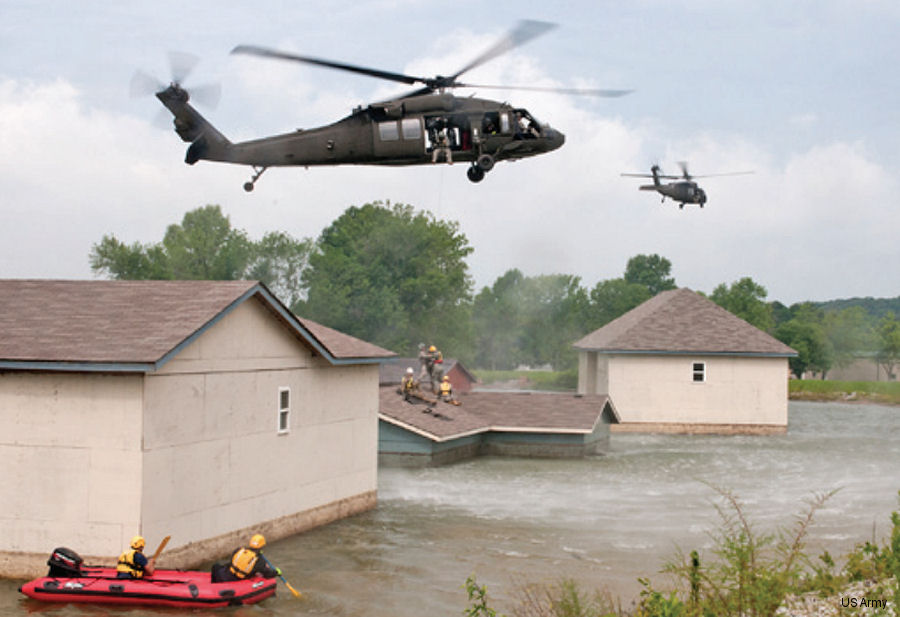
In these moments, helicopters step in as lifelines, able to fly over damaged infrastructure and reach areas that no truck or boat could access. Their vertical takeoff and landing ability makes them indispensable for delivering aid directly where it is needed most.
The use of helicopters in disaster zones is not new, but the scale and sophistication of their deployment have grown significantly. Governments, humanitarian organizations, and private operators now maintain fleets that can be rapidly mobilized to respond to emergencies anywhere in the world.
Rapid Response in Life-Threatening Situations
One of the greatest strengths of helicopters in disaster relief is their speed of deployment. Unlike ground convoys, helicopters can be airborne within hours of a crisis.
During floods, they are often the first to reach stranded families on rooftops, dropping supplies or hoisting survivors to safety. A prime example of this can also be seen in the recent Texas floods.
According to People.com, a video of a helicopter rescuing several individuals by air was shared on Facebook. The video showed a moment of hope for those still stuck due to floods. Many such helicopters were seen in the air, searching for people waiting for rescue.
Similarly, helicopters can deliver rescue teams directly into collapsed neighborhoods during earthquakes. These are places where heavy machinery cannot yet enter.
Consider the 2024 earthquake in Japan, where helicopters were used not only for rescuing but also to move supplies. According to Reuters, two US military helicopters were deployed in Japan to aid relief efforts. It was also estimated that the scale of US assistance for Japan’s earthquake could increase as required.
Addressing Hazards During Operations

Disaster zones are unpredictable. Fuel leaks, chemical spills, and fires are common in areas hit by earthquakes or large-scale accidents. To protect survivors and responders, helicopters sometimes assist with fire suppression or help deliver specialized equipment to control hazardous conditions.
Historically, aqueous film-forming foam (AFFF) was part of these operations, particularly around fuel-based fires. According to TorHoerman Law, AFFF contains per- and polyfluoroalkyl substances (PFAS), which are carcinogenic for humans. Releasing AFFF during rescue operations can result in soil and water body contamination.
The growing involvement of AFFF contamination attorneys reflects how disaster response must balance urgent action with an awareness of environmental and health impacts. This dual responsibility, saving lives immediately while minimizing unintended harm, remains central to how aviation units prepare for complex emergencies.
Many governments worldwide are taking measures to find a balance of providing aid while minimizing adverse effects. For instance, an AP News article shows that a rescue effort in North Carolina instead led to damage to the aid.
It was an aircraft from the North Carolina National Guard. The helicopter was trying to make a generator delivery, which was requested by an organization to support its supply distribution site.
However, there were many tents, people, and resources very close to the landing site. Thus, it kicked up debris and supplies while toppling canopies, which is why the landing was aborted.
Medical Evacuations and Humanitarian Aid
Perhaps the most visible contribution of helicopters in disaster relief is medical evacuation. In flooded regions, collapsed cities, or isolated mountain villages, helicopters function as flying ambulances.
They can carry critical patients directly to trauma centers, bypassing terrain that would otherwise take hours or even days to cross. For survivors with severe injuries, this time difference is often what determines survival.
Helicopters also deliver essential humanitarian aid when ground transport is impossible. Food, drinking water, medicine, and shelter materials can be dropped in remote areas to sustain entire communities. Relief organizations increasingly rely on helicopters as mobile bridges, keeping supplies flowing until more permanent infrastructure is restored.
Consider the example of Hurricane Helene, which impacted many US states, such as Florida, Georgia, Virginia, etc. The US government authorized around 1,000 active-duty soldiers to deliver food, water, and other aid.
The National Guard deployed around 46 helicopters for the operation. According to Simple Flying, the fleet included L/UH-72 Lakotas, UH-60 Blackhawks, CH-47 Chinooks, and HH-60 Pave Hawks.
Training and Preparedness
To succeed in unpredictable conditions, helicopter crews undergo rigorous training. Pilots must be able to land on improvised sites, fly in poor visibility, and adapt to rapidly shifting weather.
Rescue specialists practice hoist operations, patient handling, and coordination with ground teams. Regular simulation exercises ensure readiness, often replicating the same conditions crews will face during real disasters.
Preparedness also extends to the aircraft themselves. Some helicopters are outfitted with modular interiors that can be converted from passenger seating to medical bays within hours. Others are equipped with satellite communication systems, enabling constant coordination with relief headquarters even in areas where phone networks have collapsed.
Even the US Army is given timely training to improve humanitarian aid and disaster relief capabilities. According to the US Department of Defense, a joint training was conducted recently for the same purpose. U.S. Customs and Border Protection, Marines, sailors, and soldiers were a part of the training operation.
Frequently Asked Questions

How are helicopters chosen for disaster relief missions?
Not all helicopters are suited for every type of emergency. Lighter helicopters are often used for search and rescue in tight or mountainous terrain, while larger helicopters are selected for carrying supplies. The choice depends on the mission’s location, weather conditions, and logistical needs.
Do helicopters face restrictions when flying over disaster areas?
Yes, airspace management is crucial in disaster zones. With multiple aircraft operating at once, strict coordination is required to prevent collisions and ensure that priority missions like medical evacuations are not delayed. Air traffic controllers or military units often oversee these operations.
Are civilian helicopters ever used in disaster relief operations?
Yes, when disasters overwhelm official fleets, civilian helicopters are often contracted for assistance. Private operators, medical transport services, and even tourism companies sometimes assist in relief efforts. They bring in extra capacity to evacuate people or deliver aid as and when required.
Helicopters remain at the heart of disaster relief efforts worldwide. From medical evacuations to logistical coordination, they offer a level of flexibility and reach unmatched by any other form of transport. As disasters grow in frequency and scale, helicopters will continue to serve as lifelines from the air. They will carry hope, supplies, and safety to communities in their darkest hours.
See also |
Helicopters in disaster relief Operations