
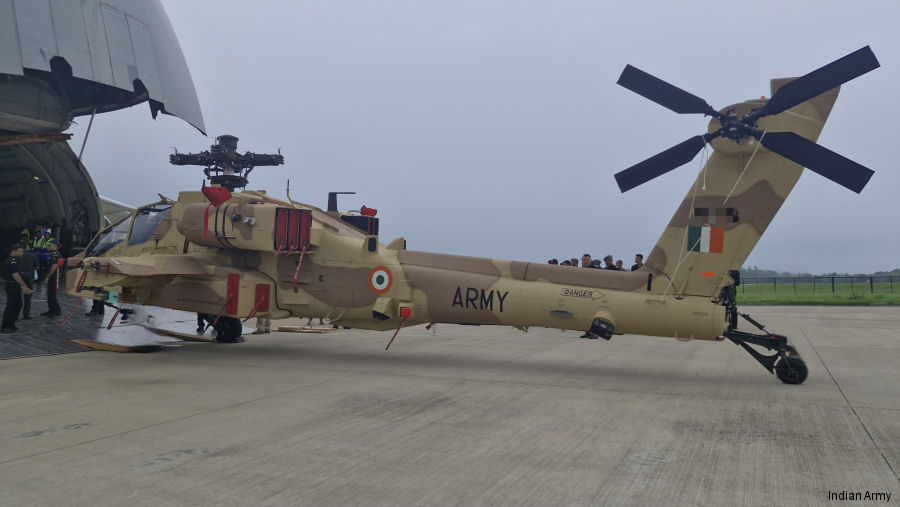
Part of a deal worth over ₹4,100 crore signed in 2020, the helicopters arrived at Hindon Airbase in Ghaziabad after a 16-month delay caused by global supply chain disruptions. The remaining three are expected by the end of this year.
The AH-64E Apache, regarded as one of the world’s most advanced attack helicopters, is equipped with fire-and-forget Hellfire missiles, 76 rockets, and a 30mm chain gun. It can track up to 128 targets per minute, engage multiple threats simultaneously, and features high agility and survivability.
Defence Minister Rajnath Singh called the induction a "significant step" in modernizing India’s defense, particularly for operations in Ladakh and on the Western front.

However, the Army’s decision to procure its own Apaches, despite the Indian Air Force already operating 22 of them, has drawn criticism from defense analysts.
Experts argue that maintaining separate fleets risks higher costs and logistical overlaps, calling for unified command structures and joint operations. Without such integration, they warn, India risks diluting the strategic advantage offered by these cutting-edge helicopters.
India’s Duplicate Apache Fleets: A Strategic Misstep?
India’s approach to keeping separate Apache fleets for the Army and the Air Force highlights a long-standing challenge in achieving true jointness among its armed forces. While the Army insists that direct control of attack helicopters is essential for quick response and close coordination with ground forces, experts caution that this approach leads to unnecessary duplication of maintenance, training, and operational costs. Countries like the U.S. have shown that joint commands, rather than asset duplication, enable faster, more efficient battlefield responses.
Instead of expanding its own fleet, the Indian Army could gain more from developing shared operational doctrines and integrated task forces with the IAF. Such reforms would ensure that critical air assets like the Apache are available when needed without splintering resources. By building a unified air-land command structure, India could save billions on procurement and maintenance while ensuring maximum combat effectiveness. Without such integration, the AH-64E Apache—a strategic asset—risks becoming an example of fragmented and inefficient resource management.
 Hindon AFS
 | |
See also |
AH-64E Apache in
Bharatiya Thalsena