
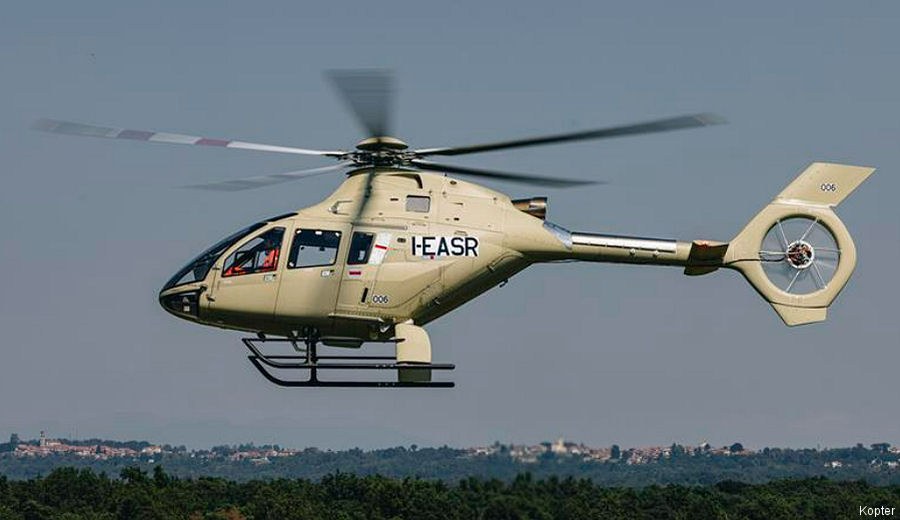
Helis, August 08, 2025 - The Leonardo AW09 is a single-engine light helicopter that began life as the Kopter SH09, a Swiss program launched in the late 2000s to create the first clean-sheet design in its class in decades.
The prototype made its maiden flight in 2014, followed by several test articles that refined the rotor system, gearbox, and avionics. When Leonardo acquired Kopter in 2020, the aircraft was rebranded as the AW09, gaining the industrial support needed to carry the program into production.
The helicopter features a five-bladed composite main rotor and shrouded tail rotor, designed to reduce noise and vibration while improving handling. Its large cabin with clamshell doors allows flexible layouts for passengers, cargo, or emergency medical missions, and its Safran Arriel 2K engine with digital controls provides efficiency and reliability. These design choices give the AW09 a modern edge compared to legacy types like the Airbus H125 and Bell 407.
Flight testing has included multiple prototypes, with early aircraft focusing on aerodynamic validation and later models used to integrate systems closer to production standard. After resolving gearbox component issues, Leonardo resumed test flights and continues to expand the flight envelope while preparing for certification. These milestones reflect steady, if sometimes delayed, progress toward market readiness.
Looking ahead, the AW09 is expected to serve a wide range of roles from utility and law enforcement to VIP transport. Interest has already been shown through distribution agreements in Europe, Asia, and North America, signaling a competitive entry once certification is achieved. The aircraft’s path from Swiss prototype to Leonardo’s lineup highlights both its technical promise and the challenges of introducing a new helicopter in a market dominated by long-established designs.
The prototype made its maiden flight in 2014, followed by several test articles that refined the rotor system, gearbox, and avionics. When Leonardo acquired Kopter in 2020, the aircraft was rebranded as the AW09, gaining the industrial support needed to carry the program into production.
The helicopter features a five-bladed composite main rotor and shrouded tail rotor, designed to reduce noise and vibration while improving handling. Its large cabin with clamshell doors allows flexible layouts for passengers, cargo, or emergency medical missions, and its Safran Arriel 2K engine with digital controls provides efficiency and reliability. These design choices give the AW09 a modern edge compared to legacy types like the Airbus H125 and Bell 407.
Flight testing has included multiple prototypes, with early aircraft focusing on aerodynamic validation and later models used to integrate systems closer to production standard. After resolving gearbox component issues, Leonardo resumed test flights and continues to expand the flight envelope while preparing for certification. These milestones reflect steady, if sometimes delayed, progress toward market readiness.
Looking ahead, the AW09 is expected to serve a wide range of roles from utility and law enforcement to VIP transport. Interest has already been shown through distribution agreements in Europe, Asia, and North America, signaling a competitive entry once certification is achieved. The aircraft’s path from Swiss prototype to Leonardo’s lineup highlights both its technical promise and the challenges of introducing a new helicopter in a market dominated by long-established designs.
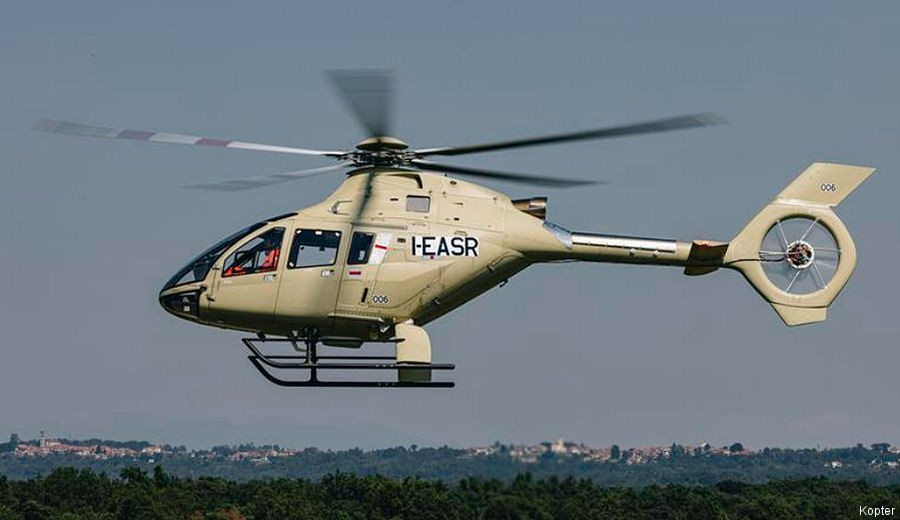

AW09 I-EASR ( Leonardo Italy )
 Vergiate
 See also |
AW09 in
Leonardo Italy