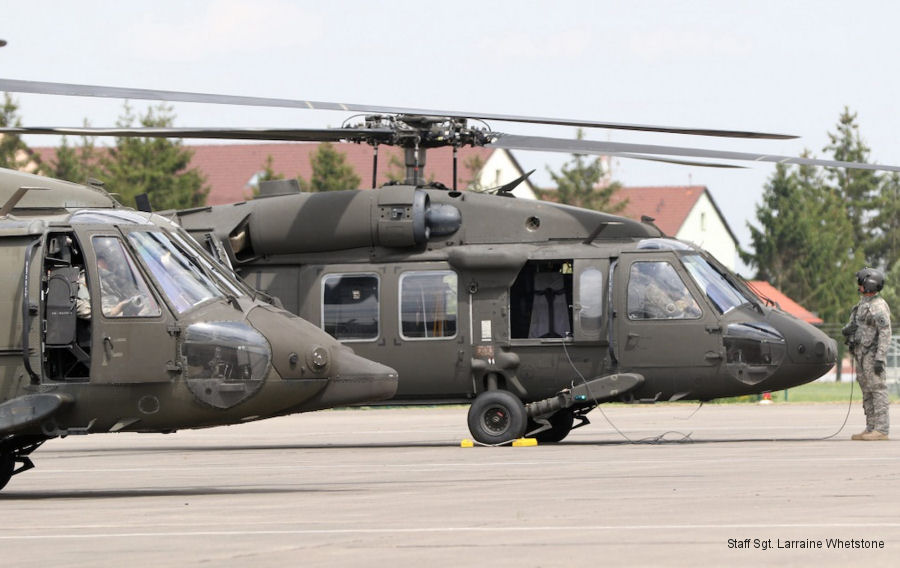

The legislation comes in the wake of a recent helicopter crash near Reagan National Airport, involving a U.S. Army UH‑60L Black Hawk helicopter that was not utilizing ADS-B Out technology—an omission that has raised serious questions about military aviation protocols in civilian airspace. On January 29, 2025, the Black Hawk (callsign "Priority Air Transport 25") collided mid-air with an American Airlines regional CRJ-700 jet (Flight 5342, operated by PSA Airlines), resulting in the deaths of all 67 people on board—64 passengers and crew on the jet and 3 crew members on the helicopter.
"This legislation is about ensuring safety and transparency for all aircraft operating in congested airspace—military or civilian," said Senator Cruz. "The ROTOR Act will close critical gaps in our flight tracking infrastructure and help prevent future tragedies."
Key Provisions of the ROTOR Act
- Mandatory Use of ADS-B Out Technology:
The bill requires all U.S. Army helicopters to be equipped with and actively use Automatic Dependent Surveillance–Broadcast (ADS-B) Out. This system broadcasts real-time flight data—such as location, altitude, and velocity—to air traffic controllers and nearby aircraft, significantly improving situational awareness and collision avoidance.
- Closing Regulatory Loopholes:
The legislation addresses current exemptions that have allowed Army helicopters to operate without ADS-B Out being activated, even in busy civilian airspace.
- National Route Review:
The ROTOR Act mandates a comprehensive review of helicopter flight paths at major airports nationwide, ensuring that current routes prioritize safety and minimize risks to populated areas.
- Inspector General Oversight:
The bill tasks the Army Inspector General with conducting a formal investigation into systemic issues that may have led to the crash near Reagan National Airport. This review will examine operational protocols, compliance, and training.
- Coordination with NTSB Findings:
The bill complements the ongoing investigation by the National Transportation Safety Board (NTSB), which has launched an official hearing to examine the circumstances surrounding the crash.
The ROTOR Act also aligns with parallel efforts in Congress, including legislation introduced by Senator Jerry Moran requiring the use of both ADS-B In and Out technology for all aircraft operating in Class B airspace—further underscoring bipartisan concern about aviation transparency and public safety.
As the bill moves through committee, lawmakers and aviation experts alike are calling the measure a significant step toward modernizing military-civilian coordination in U.S. airspace.