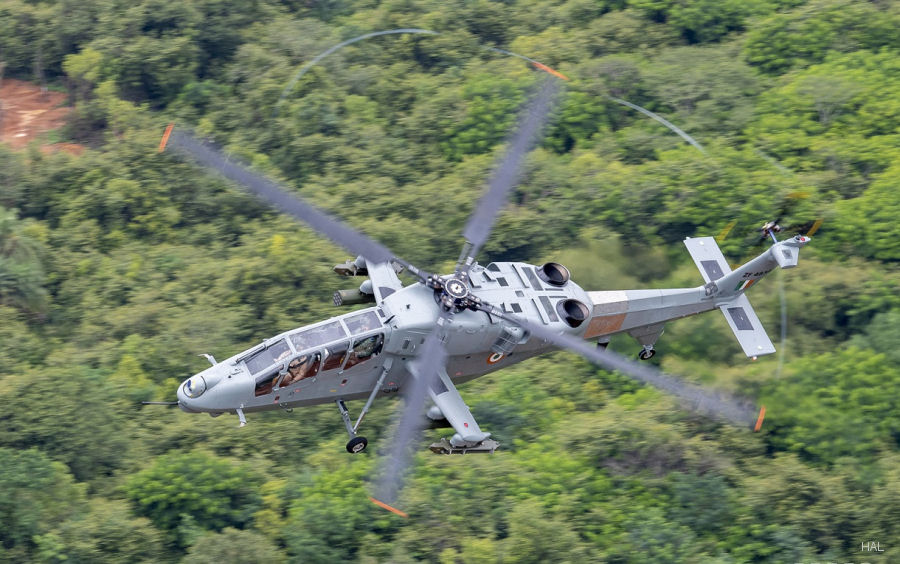

The first contract is for supply of 66 LCHs to the Indian Air Force (IAF) and second is for supply of 90 LCHs to the Indian Army.
The supply of these Helicopters shall commence from the third year and will be spread over the next five years. The contracts will enhance the combat capability of Armed Forces at high altitudes. LCH is India’s first indigenously designed and developed combat helicopter having a capability of operating at an altitude of over 5000 meters. This helicopter has a large number of components designed & manufactured in India and it is planned to achieve an overall indigenous content of over 65% during the execution of this procurement. This will involve over 250 domestic companies mostly MSMEs and will generate over 8,500 direct & indirect jobs.
Ministry of Defence also signed a contract with Metrea Management for Wet Leasing of one Flight Refuelling Aircraft (FRA) for providing Air to Air refuelling training to pilots of IAF and Indian Navy. Metrea will provide FRA (KC135 Aircraft) within six months which will be the first FRA to be wet leased by IAF.
With signing of these three contracts, the total number of contracts signed by Ministry of Defence during 2024-25 reaches to 193 with overall contract value exceeding Rs 2,09,050 crore, which is the highest ever and nearly double the previous highest figure. Out of these, the contracts to domestic industry are 177 (92%) with contract value Rs 1,68,922 Crore (81%).
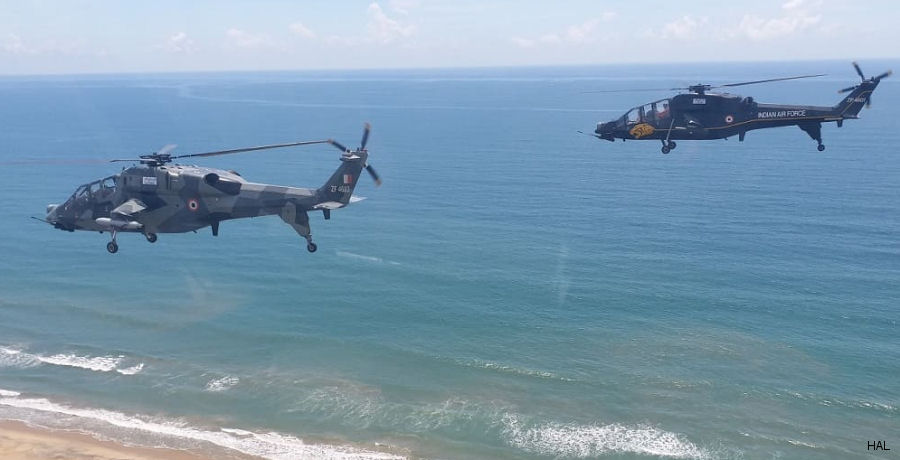
LCH Prachand
Helis - The HAL Light Combat Helicopter (LCH) Prachand is a testament to India’s growing self-reliance in defense manufacturing. Designed and developed by Hindustan Aeronautics Limited (HAL), this advanced attack helicopter was conceived to meet the Indian Armed Forces' needs for high-altitude combat operations.
The origins of the LCH can be traced back to the Kargil War in 1999, when India identified the need for a dedicated attack helicopter capable of operating in mountainous terrain. Recognizing this requirement, HAL began work on the LCH project in 2006, aiming to develop a versatile, lightweight combat aircraft with advanced capabilities.
The first prototype, known as Technology Demonstrator-1 (TD-1), made its maiden flight on March 29, 2010, in Bangalore. Following this, a second prototype, TD-2, was introduced in 2011, featuring enhanced avionics and refined aerodynamics. Subsequent test flights included high-altitude trials in Leh and Siachen Glacier, proving the helicopter’s capability to operate in extreme conditions.
Built with a stealthy design, armor protection, and crash-resistant landing gear, the LCH is optimized for combat in both conventional and asymmetric warfare. It features a 20mm turret gun, air-to-air missiles, and guided rockets, making it a formidable force in the battlefield. The helicopter is powered by twin HAL/Turbomeca Shakti engines, ensuring reliability at high altitudes.
The Indian government formally approved Limited Series Production (LSP) of 15 LCH units in 2021, with the Indian Air Force (IAF) inducting its first unit on October 3, 2022. The IAF officially named the helicopter “Prachand”, meaning “Fierce” in Sanskrit, reflecting its aggressive combat potential. The Indian Army also began forming LCH squadrons, further strengthening its high-altitude warfare capabilities.
Now with this order procurement of 156 LCH units—66 for the IAF and 90 for the Indian Army—marks a significant expansion of the country’s attack helicopter fleet. The LCH is expected to play a key role in India’s defense strategy, particularly in border regions where high-altitude operations are critical.
With its cutting-edge technology and indigenous development, the HAL LCH stands as a symbol of India’s commitment to self-reliance in defense manufacturing under the “Make in India” initiative. Its continued deployment and enhancements will solidify its place as a key asset in the Indian Armed Forces' arsenal for years to come.