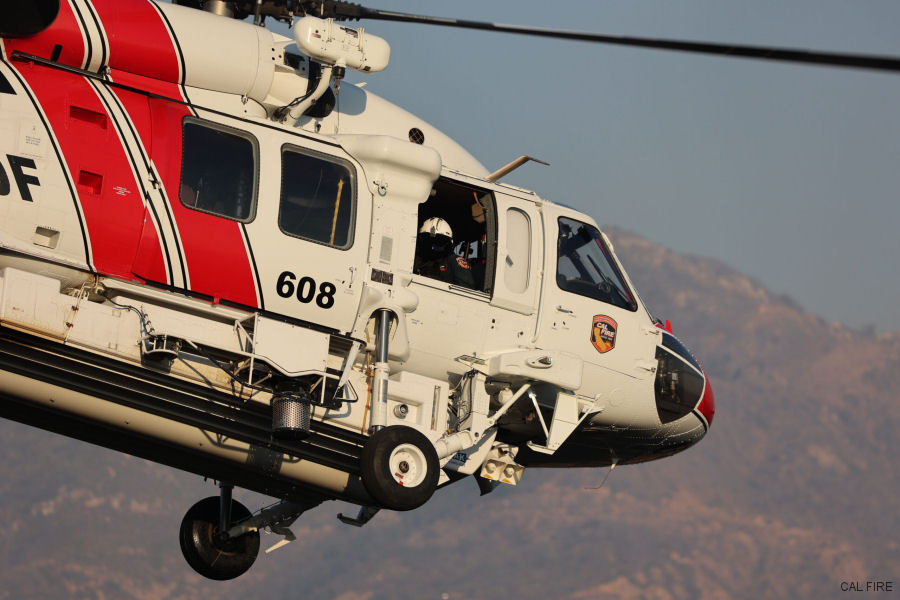
California Gov, July 31, 2025 - SACRAMENTO – Governor Gavin Newsom today announced a monumental achievement in CAL FIRE’s ongoing commitment to protecting California, as the final two of sixteen Sikorsky S-70i Firehawk helicopters arrived at McClellan Airfield in Sacramento.
This arrival completes a multi-year transition that significantly upgrades the department’s aerial firefighting capabilities. This year also marks the full conversion of all ten CAL FIRE Helitack bases from the Vietnam-era UH-1H Huey helicopters to the state-of-the-art Firehawk. It’s a full circle moment on an effort that the Governor initiated at the beginning of his first term.
This comprehensive modernization effort, which began with the first base receiving a Firehawk in 2020, represents a substantial statewide initiative and a long-term investment in the safety and protection of California’s communities, property, and natural landscapes.
Governor Gavin Newsom, said "Our fleet of Firehawk helicopters – now the largest in the world – is a proven tool in our growing firefighting arsenal. During the devastating Los Angeles fires, we saw them in action, conducting critical missions at night which stopped the Palisades Fire from dipping into Mandeville Canyon and toward the 405 freeway. Hundreds of homes were saved because of these state-of-the-art helicopters and their heroic pilots. With the Trump Administration pulling back on federal firefighting, California continues to step up to protect our communities."
Firehawk S-70i capabilities
The new Firehawk helicopters add to the largest aerial firefighting fleet in the world. Governor Newsom recently announced that the state’s second C-130 Hercules airtanker is ready for firefighting operations.
CAL FIRE’s history with helicopters in firefighting dates back to the 1960s, when the Department first utilized choppers for reconnaissance and transport. Their versatility and ability to operate in challenging terrain led to their adoption for fire suppression in support of ground crews.
“The completion of our S-70i Firehawk fleet and the transition of all Helitack bases is thanks to the dedication of the entire CAL FIRE aviation program,” said CAL FIRE Chief and Director Joe Tyler. “This is about equipping our firefighters with the most advanced tools available to respond to the increasing complexities of wildland fires.”
In the 1980s, CAL FIRE began its helicopter fleet with the Bell Huey, and for over four decades, the Huey has been the workhorse of the CAL FIRE Helitack program.
The impacts of the transition to the purpose-built S-70i Firehawk, which began in 2018, are significant:
- Increased water-dropping capacity: The Firehawk can carry nearly three times as much water as its predecessors (1000 gallons), allowing for more effective and immediate suppression efforts.
- Enhanced night operations: Outfitted for night operations, the Firehawk extends CAL FIRE’s ability to fight fires around the clock, a critical advantage in containing rapidly spreading incidents. This capability proved valuable in January when CAL FIRE responded to the Palisades Fire. Multiple CAL FIRE helicopters, and partner agency aircraft, conducted crucial night operations in the Mandeville Canyon area, dropping over 375,000 gallons of water.
Operating at low altitudes under night vision goggles (NVG) and navigating complex terrain and hazards such as high-tension power lines, flight crews were instrumental in halting the fire’s advance toward residential neighborhoods. Had the fire breached Mandeville Canyon, projections indicated a rapid spread toward the 405 Freeway corridor, putting hundreds of homes at risk. The combined nighttime and daylight operations ultimately prevented structural loss and showcased the value of CAL FIRE’s modernized aerial fleet and highly trained personnel in defending high-risk urban interface zones. CAL FIRE flew its first night mission with the Firehawk in 2022 in response to the Electra Fire.
- Expanded crew and capabilities: With the capacity for more crew and an external permanently affixed hoist, the Firehawk provides greater flexibility for personnel deployment and rescue operations.
- Improved flight safety: These state-of-the-art helicopters offer a greater degree of safety for firefighters and the community.
CAL FIRE new helicopter simulator
As part of the state’s ongoing investment in wildfire resilience and emergency response, CAL FIRE has significantly expanded its workforce over the past five years by adding an average of 1,800 full-time and 600 seasonal positions annually – nearly double that of the previous administration. Over the next four years and beyond, CAL FIRE will be hiring thousands of additional firefighters, natural resource professionals, and support personnel to meet the state’s growing demands.
In recent months, the Governor has announced millions of dollars in investments to protect communities from wildfire – with $135 million available for new and ongoing prevention projects and $72 million going out the door to projects across the state. This is part of over $5 billion the Newsom administration, in collaboration with the legislature, has invested in wildfire and forest resilience since 2019. Additionally, 54 new vegetation management projects spanning nearly 12,000 acres have already been fast-tracked to approval under the streamlined process provided by the Governor’s March 2025 state of emergency proclamation.
This builds on consecutive years of intensive and focused work by California to confront the severe ongoing risk of catastrophic wildfires. New, bold moves to streamline state-level regulatory processes builds long-term efforts already underway in California to increase wildfire response and forest management in the face of a hotter, drier climate.
This arrival completes a multi-year transition that significantly upgrades the department’s aerial firefighting capabilities. This year also marks the full conversion of all ten CAL FIRE Helitack bases from the Vietnam-era UH-1H Huey helicopters to the state-of-the-art Firehawk. It’s a full circle moment on an effort that the Governor initiated at the beginning of his first term.
This comprehensive modernization effort, which began with the first base receiving a Firehawk in 2020, represents a substantial statewide initiative and a long-term investment in the safety and protection of California’s communities, property, and natural landscapes.
Governor Gavin Newsom, said "Our fleet of Firehawk helicopters – now the largest in the world – is a proven tool in our growing firefighting arsenal. During the devastating Los Angeles fires, we saw them in action, conducting critical missions at night which stopped the Palisades Fire from dipping into Mandeville Canyon and toward the 405 freeway. Hundreds of homes were saved because of these state-of-the-art helicopters and their heroic pilots. With the Trump Administration pulling back on federal firefighting, California continues to step up to protect our communities."
Firehawk helicopters
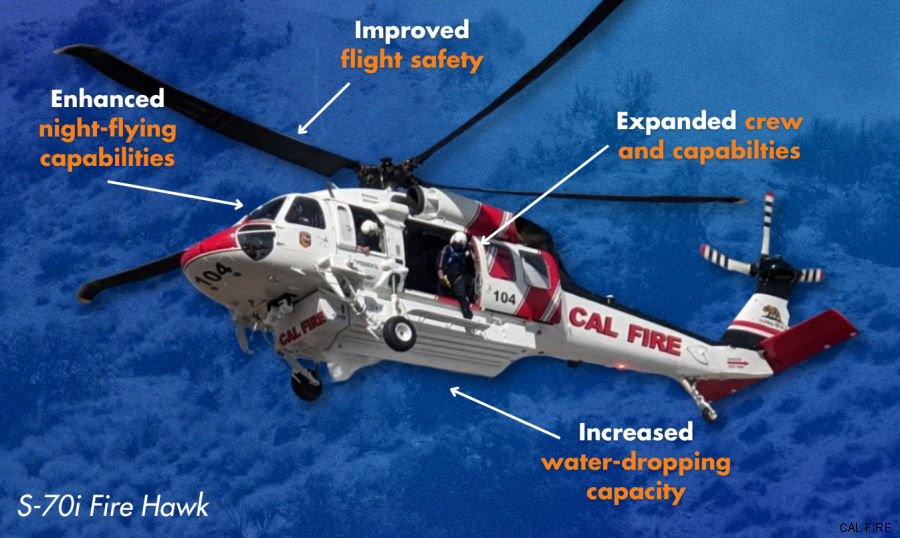
Firehawk S-70i capabilities
The new Firehawk helicopters add to the largest aerial firefighting fleet in the world. Governor Newsom recently announced that the state’s second C-130 Hercules airtanker is ready for firefighting operations.
CAL FIRE’s history with helicopters in firefighting dates back to the 1960s, when the Department first utilized choppers for reconnaissance and transport. Their versatility and ability to operate in challenging terrain led to their adoption for fire suppression in support of ground crews.
“The completion of our S-70i Firehawk fleet and the transition of all Helitack bases is thanks to the dedication of the entire CAL FIRE aviation program,” said CAL FIRE Chief and Director Joe Tyler. “This is about equipping our firefighters with the most advanced tools available to respond to the increasing complexities of wildland fires.”
In the 1980s, CAL FIRE began its helicopter fleet with the Bell Huey, and for over four decades, the Huey has been the workhorse of the CAL FIRE Helitack program.
The impacts of the transition to the purpose-built S-70i Firehawk, which began in 2018, are significant:
- Increased water-dropping capacity: The Firehawk can carry nearly three times as much water as its predecessors (1000 gallons), allowing for more effective and immediate suppression efforts.
- Enhanced night operations: Outfitted for night operations, the Firehawk extends CAL FIRE’s ability to fight fires around the clock, a critical advantage in containing rapidly spreading incidents. This capability proved valuable in January when CAL FIRE responded to the Palisades Fire. Multiple CAL FIRE helicopters, and partner agency aircraft, conducted crucial night operations in the Mandeville Canyon area, dropping over 375,000 gallons of water.
Operating at low altitudes under night vision goggles (NVG) and navigating complex terrain and hazards such as high-tension power lines, flight crews were instrumental in halting the fire’s advance toward residential neighborhoods. Had the fire breached Mandeville Canyon, projections indicated a rapid spread toward the 405 Freeway corridor, putting hundreds of homes at risk. The combined nighttime and daylight operations ultimately prevented structural loss and showcased the value of CAL FIRE’s modernized aerial fleet and highly trained personnel in defending high-risk urban interface zones. CAL FIRE flew its first night mission with the Firehawk in 2022 in response to the Electra Fire.
- Expanded crew and capabilities: With the capacity for more crew and an external permanently affixed hoist, the Firehawk provides greater flexibility for personnel deployment and rescue operations.
- Improved flight safety: These state-of-the-art helicopters offer a greater degree of safety for firefighters and the community.
California’s wildfire readiness
CAL FIRE new helicopter simulator
As part of the state’s ongoing investment in wildfire resilience and emergency response, CAL FIRE has significantly expanded its workforce over the past five years by adding an average of 1,800 full-time and 600 seasonal positions annually – nearly double that of the previous administration. Over the next four years and beyond, CAL FIRE will be hiring thousands of additional firefighters, natural resource professionals, and support personnel to meet the state’s growing demands.
In recent months, the Governor has announced millions of dollars in investments to protect communities from wildfire – with $135 million available for new and ongoing prevention projects and $72 million going out the door to projects across the state. This is part of over $5 billion the Newsom administration, in collaboration with the legislature, has invested in wildfire and forest resilience since 2019. Additionally, 54 new vegetation management projects spanning nearly 12,000 acres have already been fast-tracked to approval under the streamlined process provided by the Governor’s March 2025 state of emergency proclamation.
This builds on consecutive years of intensive and focused work by California to confront the severe ongoing risk of catastrophic wildfires. New, bold moves to streamline state-level regulatory processes builds long-term efforts already underway in California to increase wildfire response and forest management in the face of a hotter, drier climate.
Comments | Join community |
| Well done! |
| |
See also |
CalFire
Sikorsky S-70 Firehawk
Sikorsky S-70i Black Hawk
CAL FIRE Orders Firehawk


