
Combat Search and Rescue. Sandy Mission
"These Things We Do, That Others May Live" Read about USAF Combat Search and Rescue History
The "Sandy" mission call sign traces its legendary roots back to the Vietnam War, originally born from the necessity of providing specialized close air support for downed pilots deep within hostile jungle territory. During this era, the mission was spearheaded by the Douglas A-1 Skyraider, a rugged, propeller-driven attack aircraft capable of carrying immense ordnance loads and loitering for hours over a crash site. The Skyraider pilots, or "Sandys," became the tactical commanders of the rescue task force, tasked with suppressing enemy anti-aircraft fire, marking survivor locations with smoke, and physically shielding the vulnerable "Jolly Green Giant" helicopters from ground threats during the critical moments of a hoist extraction. As the nature of the battlefield evolved from the dense jungles of Southeast Asia to the high-threat, integrated air defense environments of the modern era, the Sandy role transitioned to more survivable and digitally integrated platforms. The Fairchild A-10 Thunderbolt II eventually assumed the mantle, bringing improved armor, the devastating 30mm GAU-8 cannon, and advanced sensors to the mission while maintaining the low-speed maneuverability required to escort helicopters. Today, the Sandy mission remains a sophisticated coordination of multi-domain assets, where the lead pilot manages a complex "rescue triad" of electronic warfare, refueling tankers, and precision strike platforms to ensure that even in the most contested airspace, no service member is left behind.
 Continue from Rescue helicopters
1964 - Sikorsky HH-3 Jolly Green Giant
Continue from Rescue helicopters
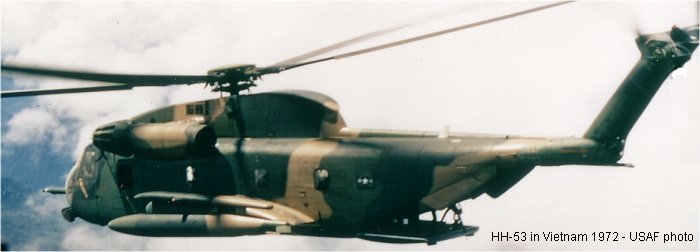
1964 - Sikorsky HH-3 Jolly Green Giant 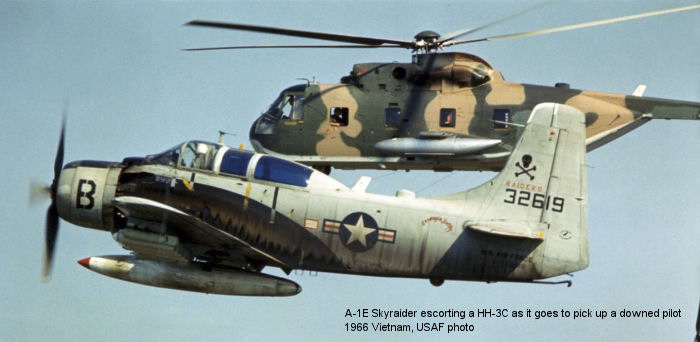 1968 - Sikorsky HH-53
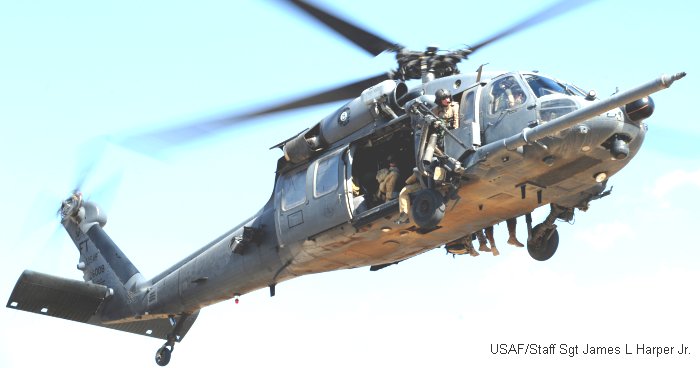
  1985 - Sikorsky HH-60G Pave Hawk
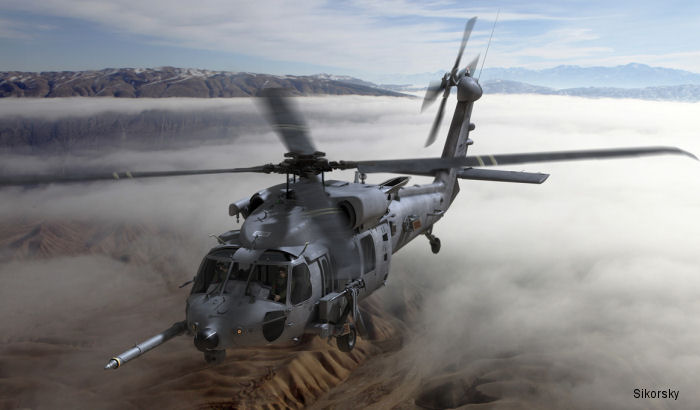
  2020 - Sikorsky HH-60W
  See also Special Operations Command
 |