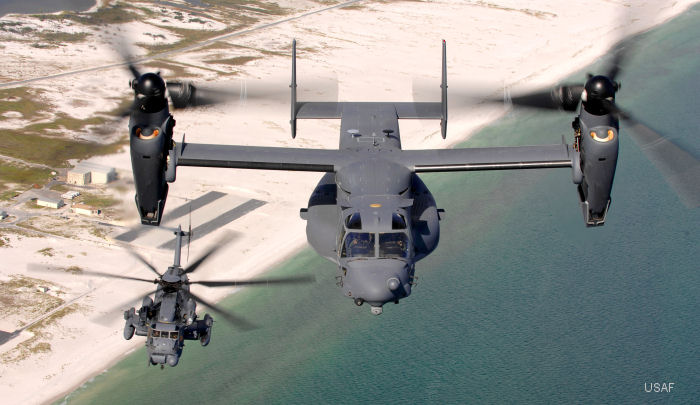
United States Air Force Special Operations Command (AFSOC)
The Air Force Special Operations Command (AFSOC) was formally established on May 22, 1990, as a Major Command of the U.S. Air Force, headquartered at Hurlburt Field, Florida. Born from the hard-learned lessons of the failed 1980 Iranian hostage rescue mission, AFSOC serves as the air component of the U.S. Special Operations Command and is responsible for providing specialized airpower to global combatant commanders. The command operates a highly diverse and modified fleet of aircraft designed for clandestine infiltration, exfiltration, and precision strike missions that occur under the cover of darkness or in extreme weather conditions. This unique mission set requires AFSOC to manage specialized versions of the C-130 airframe, such as the AC-130J Ghostrider and MC-130J Commando II, alongside tilt-rotor CV-22B Ospreys and various unmanned systems.
The core strength of AFSOC lies in its Special Warfare airmen, including Combat Controllers, Tactical Air Control Party specialists, and Special Reconnaissance operators, who provide the critical link between ground forces and devastating airpower. These airmen are trained to seize and operate austere airfields, coordinate complex air-to-ground strikes, and manage the "chaos of the stack" during high-intensity engagements. By combining advanced technology with elite personnel, AFSOC maintains a constant readiness to execute unconventional warfare, counter-terrorism, and humanitarian assistance missions anywhere in the world on a moment's notice.
 Continue from CSAR helicopters
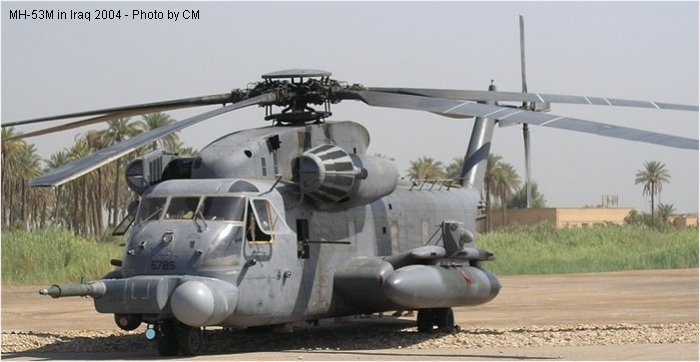
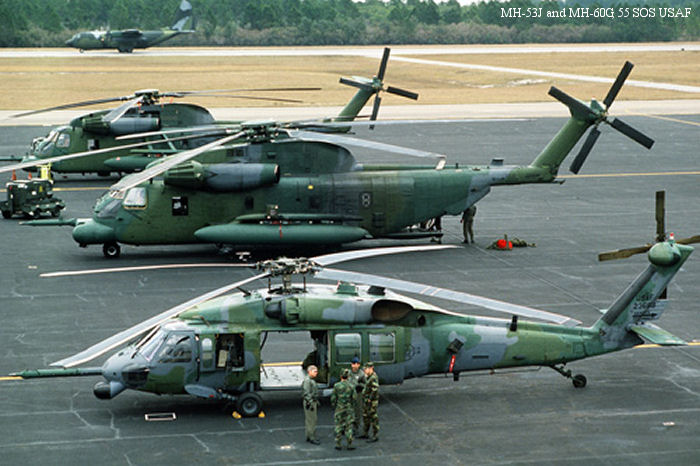 1980 - Sikorsky MH-53J/M Pave Low
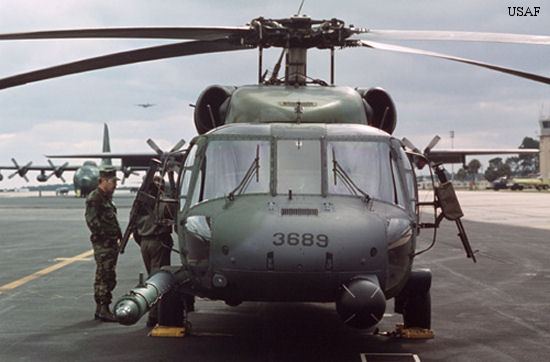
 1982 - 1991 - Sikorsky MH-60G Pavehawk
 2005 - Bell/Boeing CV-22B Osprey