 US Marine Corps
USMC
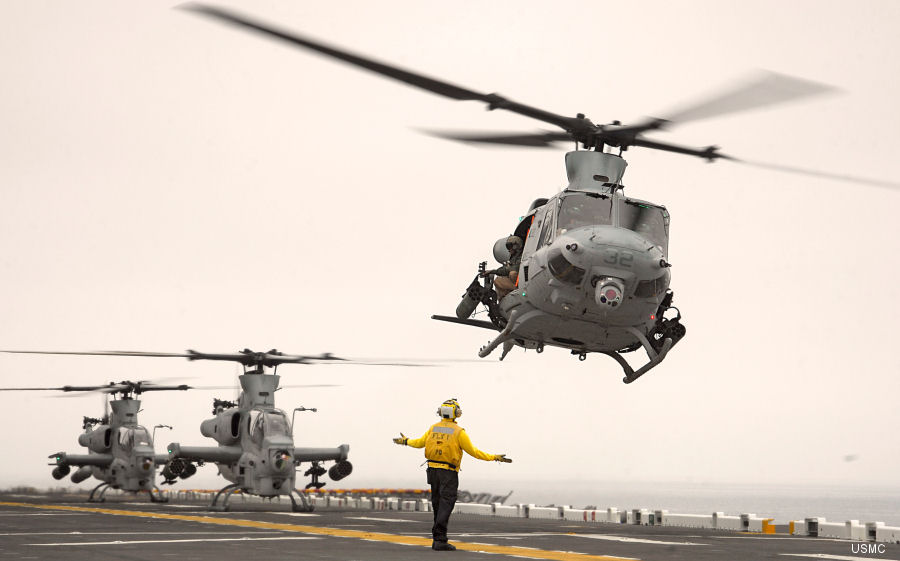
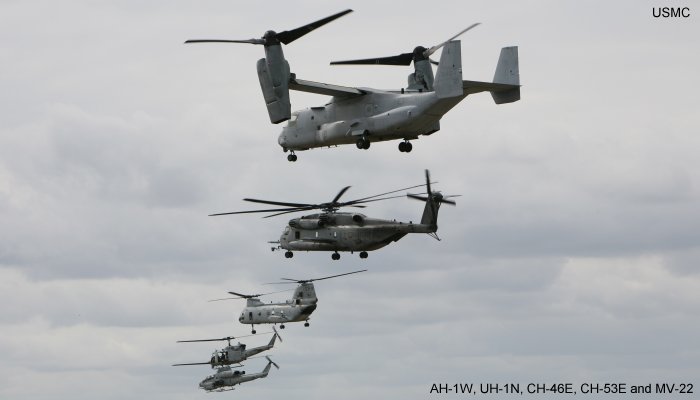
Created on 10 Nov, 1775 by an act of the Continental Congress, the first Marines were recruited in Tun Tavern, Philadelphia, PA. The rest is history. The worlds finest fighting force started operating helicopters in 1947. Developed vertical assault and vertical envelopment techniques. Continue to expand maneuver warfare capabilities with introduction of MV-22 Osprey tilt-rotor aircraft.
To become a helicopter pilot in the United States Marine Corps, candidates must first obtain a commission as a Marine Corps officer. This requires holding a bachelor’s degree and successfully completing both Officer Candidates School and The Basic School, where newly commissioned officers receive foundational training in leadership and ground combat.
Following commissioning, prospective aviators begin formal flight training with Aviation Pre-flight Indoctrination (API) at Naval Air Station Pensacola. This initial phase provides academic and physiological instruction in aerodynamics, navigation, meteorology, and flight physiology. Candidates then proceed to primary flight training, typically lasting around six months, flying the Beechcraft T-6B Texan II. Performance during this stage—along with service requirements—determines selection into advanced pipelines, including rotary-wing aviation.
Those selected for helicopter training continue at Naval Air Station Whiting Field, where they train on platforms such as the TH-73A Thrasher (which replaced the Bell TH-57 Sea Ranger). This phase emphasizes helicopter-specific flight skills, including hovering, low-level navigation, formation flying, and shipboard operations.
Upon successful completion of advanced training, aviators are awarded the designation of Naval Aviator, commonly referred to as receiving their “Wings of Gold.” They are then assigned to a Fleet Replacement Squadron (FRS), where they undergo type-specific training on operational aircraft such as the Bell AH-1Z Viper, Bell UH-1Y Venom, or Sikorsky CH-53K King Stallion before joining an operational unit.
Following commissioning, prospective aviators begin formal flight training with Aviation Pre-flight Indoctrination (API) at Naval Air Station Pensacola. This initial phase provides academic and physiological instruction in aerodynamics, navigation, meteorology, and flight physiology. Candidates then proceed to primary flight training, typically lasting around six months, flying the Beechcraft T-6B Texan II. Performance during this stage—along with service requirements—determines selection into advanced pipelines, including rotary-wing aviation.
Those selected for helicopter training continue at Naval Air Station Whiting Field, where they train on platforms such as the TH-73A Thrasher (which replaced the Bell TH-57 Sea Ranger). This phase emphasizes helicopter-specific flight skills, including hovering, low-level navigation, formation flying, and shipboard operations.
Upon successful completion of advanced training, aviators are awarded the designation of Naval Aviator, commonly referred to as receiving their “Wings of Gold.” They are then assigned to a Fleet Replacement Squadron (FRS), where they undergo type-specific training on operational aircraft such as the Bell AH-1Z Viper, Bell UH-1Y Venom, or Sikorsky CH-53K King Stallion before joining an operational unit.
Locations
Models
| 2020- | VH-92A Patriot |
| 2018- | CH-53K King Stallion |
| 2011-2018 | CQ-24A K-MAX |
| 2005- | UH-1Y Venom |
| 2000- | MV-22 |
| 1989- | VH-60N White Hawk |
| 1979- | MH/CH-53E |
| 1975- | VH-3D Sea King |
| 1971-2014 | UH-1N |
| 1971-1992 | VH-1N |
| 1968- | VH-53D |
| 1968- | AH-1 Cobra / Viper |
| 1966-1968 | UH-1B Iroquois |
| 1966-2012 | CH-53A/D |
| 1965-1986 | TH-1E Iroquois |
| 1964-1986 | UH-1E Iroquois |
| 1964-1970 | Seasprite |
| 1962-1978 | VH-3A Sea King |
| 1962-2015 | CH-46 Sea Knight |
| 1957-1962 | HUS-1Z / VH-34D Seahorse |
| 1956-1970 | S-56 H-37 |
| 1955-1971 | S-58 H-34 |
| 1953-?? | H-43 Huskie |
| 1952-?? | S-52 H-18 HO5S |
| 1951-1960 | S-55 H-19 |
| 1949-1964 | PV-18 |
| 1946-?? | S-51 / R-5 / H-5 |
Operations
| 10 Mar 20222022 | 10 Apr 20222022 |  Exercise Cold Response 2022 Exercise Cold Response 2022 |
| 21 Feb 20222022 | 11th MEU 2022-2 | |
| 27 Jul 20182018 | 17 Aug 20182018 |  Exercise Pitch Black 2018 Exercise Pitch Black 2018 |
| 07 May 20182018 | 18 May 20182018 |  Joint Stars 2018 Joint Stars 2018 |
| 06 Sep 20172017 | -- |  Hurricanes Irma, Jose and Maria Relief Operations Hurricanes Irma, Jose and Maria Relief Operations |
| 04 Oct 20162016 | -- |  Hurricane Matthew relief operations Hurricane Matthew relief operations |
| 01 Aug 20162016 | 06 Dec 20162016 |  Operation Odyssey Lightning Operation Odyssey Lightning |
| 19 Feb 20162016 | 22 Mar 20162016 | Cold Response 2016 |
| 14 Nov 20152015 | -- |  Exercise UNITAS Atlantic 2015 Exercise UNITAS Atlantic 2015 |
| 03 Oct 20152015 | 06 Nov 20152015 |  Exercise Trident Juncture 2015 Exercise Trident Juncture 2015 |
| 25 Apr 20152015 | 25 May 20152015 |  Nepal Earthquake 2015 Nepal Earthquake 2015 |
| 01 Aug 20142014 | 31 Dec 20142014 | 11th MEU WESTPAC 14-2 |
| 24 Mar 20142014 | 25 Mar 20142014 |  NSS 2014 NSS 2014 |
| 01 Jan 20142014 | -- |  Ebola Outbreak in West Africa Ebola Outbreak in West Africa |
| 08 Nov 20132013 | -- |  Typhoon Haiyan relief operations Typhoon Haiyan relief operations |
| 15 Jul 20132013 | 06 Aug 20132013 | Talisman Saber 2013 |
| 10 Aug 20112011 | 22 Aug 20112011 | 11th MEU 2011-08 |
| 12 Mar 20112011 | 04 May 20112011 |  Operation Tomodachi - Tohoku Earthquake Relief Operation Tomodachi - Tohoku Earthquake Relief |
| 20 Dec 20012001 | -- |  ISAF ISAF |
| 09 Oct 19991999 | 12 Oct 19991999 | San Francisco Fleet Week 1999 |
| 04 Jun 19941994 | 05 Jun 19941994 |  D-Day 50th Anniversary Flypast D-Day 50th Anniversary Flypast |
| 05 Jan 19911991 | 11 Jan 19911991 |  Operation Eastern Exit Operation Eastern Exit |
| 16 Aug 19901990 | 10 Mar 19911991 |  Operation Desert Shield/Storm Operation Desert Shield/Storm |
| 30 Aug 19791979 | -- |  Hurricane David relief operations Hurricane David relief operations |
| 29 Apr 19751975 | 30 Apr 19751975 |  Operation Frequent Wind Operation Frequent Wind |
| 20 Jul 19741974 | 30 Sep 19741974 |  Partition of Cyprus Partition of Cyprus |
| 18 May 19671967 | 26 May 19671967 |  Operation Beau Charger Operation Beau Charger |
| 10 Mar 19661966 | 11 Mar 19661966 | Evacuation of A Shau Special Forces Camp |
| 09 Apr 19621962 | 30 Nov 19641964 | Operation Shufly |